Breakdowns and accidents can throw a wrench in your plans. Understanding the towing service process can help alleviate stress and improve your roadside experience.
Before the towing truck arrives, follow any safety protocols or instructions offered by your roadside assistance provider or local law enforcement. Generally, this will include activating your hazard lights and moving your vehicle to a safe spot off the highway. Contact Colorado Springs Towing for more information.
Dispatch
Dispatch is the process of connecting stranded motorists with towing services. It requires attention to detail, an in-depth understanding of specific situations, and proficiency in specialized tools and software. Fortunately, the towing industry is well-equipped with a variety of dispatch services that can streamline this complex task and help to ensure greater customer satisfaction and safety.
During the initial call, the dispatcher will gather essential information about the vehicle and its situation. This will include the location, type of car or truck, and the reason for the tow. This will allow the towing service to dispatch a driver with the right equipment and skills to help resolve the issue as quickly as possible.
It is also important to communicate clearly and concisely with the dispatcher. This will not only help to keep the line of communication open but will also prevent misunderstandings and confusion. This is especially important when dealing with a stranded motorist who may be in an emotional state.
For example, if a person calls to report a wrecked car, the dispatcher needs to know the make and model of the vehicle and whether it is on fire or not. This will enable the towing company to dispatch a specialist wrecker truck with the right equipment for the job.
Additionally, the dispatcher should also ask about any valuables that might be inside the vehicle. This will protect the vehicle and its passengers from theft or loss during transportation. It is also a good idea to remove any items that might be vulnerable to damage during the towing process, such as electronics, laptops, or other personal belongings. The towing company will usually provide a secure storage area for these items while the vehicle is being transported.
Arrival
It can be frustrating to wait for roadside assistance. However, understanding the towing process can alleviate some of your anxiety during roadside emergencies or accidents. Once a tow truck driver is dispatched, they will head to your location within a reasonable timeframe. In the meantime, it’s important to stay calm and follow any safety protocols that may be recommended by roadside assistance providers or law enforcement officials. This may include activating your hazard lights and moving to a safer location away from traffic.
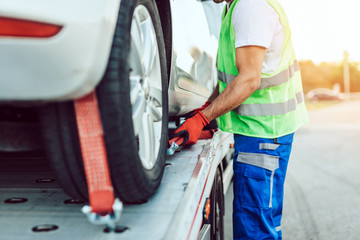
Once the tow truck arrives, the operator will assess your vehicle’s condition and determine the best way to secure it for transport. Depending on the type of towing service you requested, they may use different methods, including flatbed trucks and hydraulic ramps. The tow truck technician will also have a brief conversation with you about your final destination and confirm the price of the tow before hooking you up. They will then safely load your vehicle onto the tow truck bed. Afterwards, they will take care to position your vehicle evenly and securely to prevent shifting or damage during transportation.
Hook-up
The hooking up of a towing service is the process by which the vehicle used for transporting is coupled to the loaded vehicle. This is done using a variety of methods, depending on the type of towing vehicle, including a wheel lift, flatbed, winch, or integrated platform. The specific method used will depend on the type of car you have and its condition. You should ask the technician who arrives to explain the hooking-up procedure in detail.
Despite the high levels of competition in this industry, starting your own towing business can be a profitable and lucrative venture. Conducting detailed local market research, prudent financial planning, and adherence to professional standards are key components of success in this sector.
Your towing service should offer a variety of services. Emergency towing is the bread and butter for most operations, but roadside assistance and specialty services such as motorcycle towing can also provide a healthy revenue stream. Once you have established a solid core operation, you can consider expanding into additional areas, such as heavy-duty towing for semi trucks or luxury vehicle transport.
Before starting a towing service, you must have a safe storage yard with proper zoning and enough space for parking your vehicles. This is an important aspect of your operating model because it impacts efficiency and profitability directly. You should also implement strong administrative protocols for billing, record maintenance, and regulatory compliance. In addition, you must invest in dispatch and communication systems that improve response times and routing optimization.
Transportation
The transportation industry is the movement of goods and services from one place to another. It is an essential service that enables the exchange of commodities, and it has shaped civilizations throughout history. The field is broadly divided into infrastructure, vehicles, and operations. The infrastructure includes roads, railways, airways, canals, and pipelines, as well as airports, train stations, bus stations, warehouses, trucking terminals, refueling depots, and seaports. The vehicles include wagons, carriages, and other means of transporting people and cargo, such as cars, trucks, motorcycles, trains, airplanes, and ships. The operation of transportation systems requires skilled employees and management.
The towing process typically begins when a car owner calls a roadside assistance provider or tow truck company for help. The dispatch center will send a tow truck driver to the vehicle’s location and determine the best method of transporting the car based on its condition. Before beginning towing, the tow truck driver will ensure that safety measures are in place. This may include activating hazard lights and setting up warning signs or cones to prevent accidents or injuries.
In some cases, a towing service will transport the vehicle to a repair shop or storage facility. Other times, the driver will bring the car to a designated area on an expressway, such as the North Luzon Expressway (NLEX) or Subic-Clark-Tarlac Expressway (SCTEX). Some tow truck drivers have specialized equipment that allows them to remove a vehicle from a traffic accident without interrupting the flow of traffic. For example, they use a special bypass system that allows the tow truck to power a vehicle’s lighting harness through a separate wire from the trailer plug. This can reduce the risk of damage to the vehicle’s wiring and other safety systems.
Drop-off
The process of working with a towing service can be a stressful one, especially for first-timers. But understanding the towing process can help reduce stress and allow you to work with a towing company effectively. In this blog post, we’ll walk you through the towing process and provide tips for a positive experience with a towing service.
When you call a towing service, they’ll ask for information about your vehicle and the reason for its breakdown. This information will help them dispatch the appropriate equipment and personnel to your location quickly. This information includes your exact location, the type of car you drive, and the nature of the breakdown. If necessary, the towing service will also request that you activate your hazard lights and set up safety signals, such as reflective triangles or cones, to further alert passing drivers to your vehicle’s presence.
Once the tow truck driver arrives at your location, they’ll assess your vehicle’s condition and determine the best method for transporting it. They may also check to see whether the services you requested are appropriate for your situation, and they’ll briefly discuss your final destination and confirm the price before starting towing.
In most cases, a towing service will be able to transport your vehicle to its destination in 30-60 minutes from the time you called them. This is because the towing company will follow an efficient route that complies with traffic laws and safety regulations. They will also be in constant communication with the dispatcher to monitor your vehicle’s condition. When the tow truck arrives at your destination, they’ll unload your vehicle safely and securely. They’ll also inspect your vehicle for any damage that occurred during transportation and inform the dispatcher of the outcome of the inspection.